GEOCHEMISTRY FOR COAL COMBUSTION RESIDUALS (CCR)
Turning Chemical Insight into Regulatory Compliance
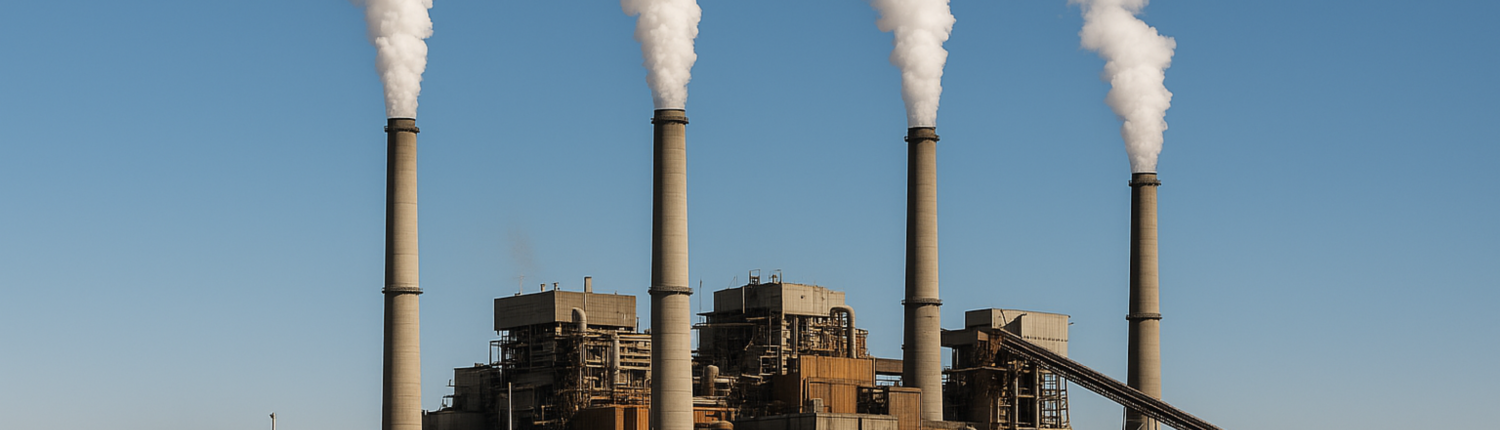
Coal remains a cornerstone of reliable energy production — providing base-load power that supports industries, communities, and the broader electrical grid. However, with that benefit comes responsibility. The same combustion process that generates electricity also produces Coal Combustion Residuals (CCR) — fine ash and Flue Gas Desulfurization (FGD) by-products that, if not properly managed, can impact groundwater, surface water, and surrounding ecosystems.
Effective geochemical monitoring ensures that the advantages of coal-based energy are not overshadowed by preventable environmental costs.
Every power plant site has a unique geochemical story — shaped by its local geology, stratigraphy, structural framework, hydrology, and operational history. These factors influence how CCR leachate interacts with natural groundwater chemistry, often creating complex chemical fingerprints that blur the line between natural and anthropogenic signals.
At Water & Environmental Technologies (WET), we specialize in disentangling that complexity. Through innovative geochemical and modeling approaches, we empower utilities, site owners, and regulators to understand where contaminants originate, how they migrate, and how to design lasting, defensible, and cost-effective solutions that meet both environmental and regulatory standards.

- CCR Rule Clarity (40 CFR Part 257)—From detection to corrective action, we connect geochemical evidence directly to EPA CCR Rule requirements, supporting permitting, compliance documentation, and project approvals.
- Source Verification and Fingerprinting—Multi-isotopic tracers (⁸⁷Sr/⁸⁶Sr, δ¹¹B, Pb-Pb, δ¹⁸O-δD, etc.) and diagnostic elemental ratios to distinguish coal ash and FGD impacts from natural groundwater signatures, as well as tracing aerosol impacts from industrial emissions.
- Speciation and Solubility Modeling—PHREEQC-based simulations define how trace metals behave under evolving pH and redox conditions.
- Closure and Post-Closure Support—Predicting long-term water chemistry beneath cover systems and within saturated zones.
- Performance and Compliance Metrics—Transforming chemistry into measurable indicators that demonstrate stability, compliance, and long-term protection.
- Strategic Risk Assessment—Evaluating geochemical trends and site data to identify key cost drivers and minimize long-term remediation expenses. Modeling and Predictive Analysis.
(Integrating Geochemical Data with Fate and Transport Modeling)
At WET, we integrate geochemical understanding with advanced reactive and conservative transport modeling to predict how contaminants behave, migrate, and stabilize in the subsurface. This integration connects laboratory data, field measurements, and engineering design to produce results that are both scientifically sound and regulator-ready.
Using industry-standard platforms such as Geochemist’s Workbench, PHREEQC, and GoldSim, our team quantifies the processes that control CCR-related water chemistry and links those reactions to site-scale groundwater flow and transport behavior.
- Geochemist’s Workbench (GWB)—Interprets complex water-chemistry datasets, calculates speciation, and evaluates mineral equilibria (e.g., ettringite, gypsum, calcite, ferrihydrite) to determine which reactions stabilize or mobilize trace elements like selenium, arsenic, and molybdenum.
- PHREEQC—Performs speciation and reactive-transport modeling, testing how pH buffering, redox transitions, and mineral transformations influence contaminant mobility across time and distance.
- GoldSim—Integrates chemical reaction outputs into probabilistic fate-and-transport models, coupling geochemistry with groundwater flow and uncertainty analysis to forecast long-term closure performance and risk.
By integrating geochemical data with fate and transport modeling, WET supports:
- Remediation and closure design–ensuring chemical compatibility and system stability.
- Prediction of contaminant migration and attenuation–under realistic hydrogeologic and geochemical conditions.
- Human and ecological risk assessments–grounded in speciation and bioavailability, not just total concentrations.
- Regulatory decisions–providing quantitative, defensible evidence for CCR Rule compliance and post-closure performance.
This integrated approach allows WET to move beyond static data interpretation—enabling our clients to see not only what is happening today, but what will happen decades into the future. The result: science-based, regulator-trusted, and economically sound environmental management strategies.
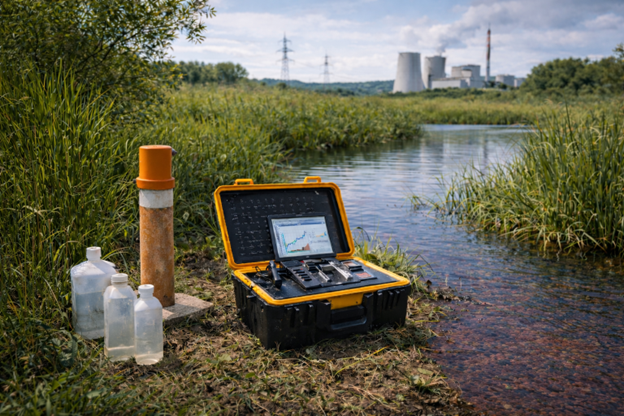



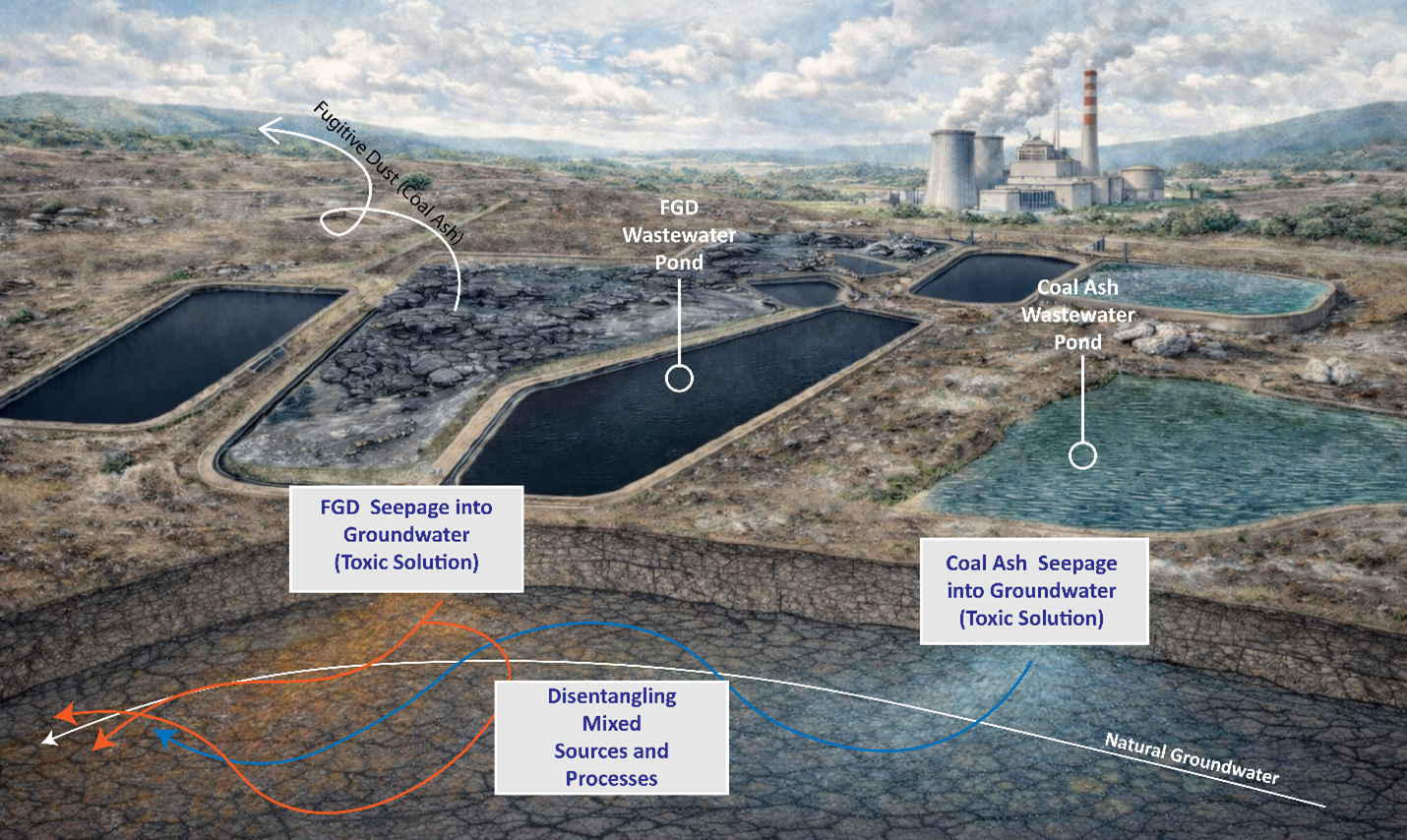
The investigation was performed under the framework of the U.S. EPA Coal Combustion Residuals (CCR) Rule, providing the technical basis required for groundwater protection, corrective-action evaluation, and eventual pond-closure planning. Multiple geochemical and isotopic tracers were combined with chloride mass-balance calculations to distinguish the natural upper limit of Cl contributed by the shale aquifer from the elevated concentrations attributable to wastewater leakage. The study confirmed that an FGD wastewater pond was actively impacting groundwater, while isotopic fingerprints showed that ash pond water was also entering the system — not as the dominant contaminant source, but as a diluting endmember that blended with the leaking FGD plume. Fate-and-transport analysis demonstrated that key constituents from the wastewater were partially attenuated through adsorption into the shale’s clay matrix, while the underlying geochemistry indicated continued water-rock interaction. These results gave the facility a defensible, regulator-aligned understanding of true source contributions and enabled development of focused, cost-effective CCR pond closure and remediation strategies.
LET’S CONNECT
Brad Bennett, PG
bbennett@waterenvtech.com
John Trudnowski, PE
jtrudnowski@waterenvtech.com

“Defensible chemistry is the foundation of every closure decision.”