GEOCHEMISTRY FOR EMERGING CONTAMINANTS AND PFAS
Per- and polyfluoroalkyl substances (PFAS) services : Turning Chemical Insight into Regulatory Clarity & Environmental Confidence
At Water & Environmental Technologies (WET), we see the PFAS challenge as more than a regulatory checkbox — it’s a defining test of scientific responsibility in the modern water cycle. These “forever chemicals,” along with microplastics, endocrine disruptors, and other emerging contaminants, now move through the same systems that sustain communities, industries, and ecosystems. Managing them demands more than treatment — it requires chemical insight that connects data, risk, and design.
Our geochemists, modelers, and field scientists bring a full-spectrum approach that integrates forensic geochemistry, and hydrogeologic modeling to solve PFAS problems from source to receptor. We specialize in tracing contamination through groundwater, stormwater, and air pathways; differentiating industrial versus municipal signatures; and translating complex chemistry into clear, defensible strategies for clients and regulators alike.
What sets WET apart is our ability to turn complexity into confidence. We combine peer-reviewed science, advanced analytical tools, and hands-on field experience to design solutions that are as rigorous as they are actionable. Whether addressing an emerging regulatory limit, legacy PFAS contamination, or product-chain risk, our focus remains constant: protecting public health, environmental integrity, and the trust that connects them.

“Forever chemicals” is more than a catch-phrase: the per- and poly-fluoroalkyl substances (PFAS) class is persistent, mobile, globally regulated — and capable of eroding operational, financial and reputational value if not managed proactively.
Most organizations still treat PFAS as a narrow remediation issue. But the most forward-looking treat it as an enterprise challenge, integrating:
- supply-chain/product lifecycle exposures
- multisector media (soil, groundwater, surface water, air, residuals)
- evolving regulation, litigation, public scrutiny
Our Difference
We merge rigorous geochemistry, hydraulic/transport modelling and regulatory strategy with business-level clarity and client-ready presentation.

Strategic & Enterprise-Risk Advisory
- PFAS portfolio screening across operations, products, supply chain and acquisitions
- Regulatory-applicability mapping: global jurisdictions, evolving standards, emerging liabilities
- Life-cycle planning: legacy sites, active landfills and residuals/end-of-life programs
Investigation, Forensics & Conceptual Site Models (CSM)
- PFAS-specific sampling protocols + cross-contamination control (e.g., tubing, PPE, media)
- Source identification (e.g., PFAS footprints, manufacturing effluents), fate/transport analysis
- Multi-media Conceptual Site Models linking groundwater, surface water, air emissions, biosolids & residuals
- Litigation-ready documentation and expert testimony (where required)
Modeling, Hydrogeochemistry, and Legacy Pathways
- Reactive-transport modelling for current and long-term plume contaminant behavior
- Geochemical considerations (mineral dissolution/precipitation) tied to treatment/disposal decisions
- Data analytics, mass-balance assessments across media (solid, aqueous, gaseous)
Stakeholder Engagement, Regulatory Strategy & Funding
- Transparent communications with regulators, communities, and investors
- Turning key project deliveries from pilot through startup while aligning with regulatory timelines

- Municipal Water and Wastewater Utilities (source-water, sludge, treated effluent)
- Defense, Aviation and Fire-fighting Training Sites (AFFF legacy)
- Manufacturing and Chemical Processing (fluoropolymer, plating, coatings)
- Landfills, Mining &\and Oil & Gas (brine, produced water, site closures)
- Food and Beverage, Consumer Goods (product-stewardship and supply-chain PFAS)
- Insurance and Legal (litigation readiness, liability modelling)

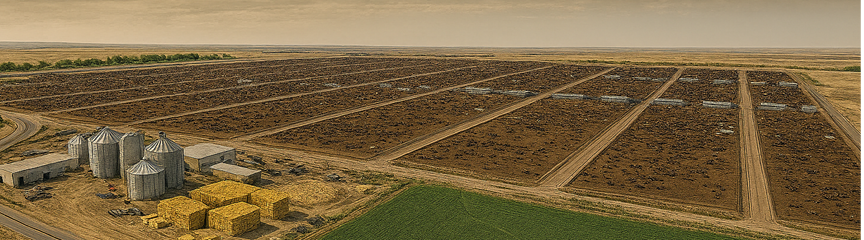
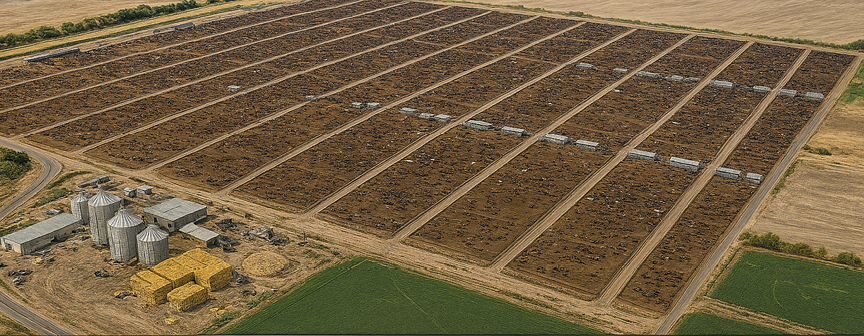
Concentrated Animal Feeding Operations (CAFOs)
Lagoons, Application Fields, and Compost Areas
Environmental Impact
CAFO facilities can generate large volumes of nutrient-rich and pathogen-laden waste. When improperly managed, lagoons, land-applied fields, and composting areas may contribute to:
- Elevated nitrate, ammonia, phosphorus, and salinity in groundwater and surface water
- Transport of pathogens (e.g., E. coli), hormones, and veterinary pharmaceuticals
- Long-term degradation of aquifers due to nutrient loading and redox alteration
- Surface-water eutrophication and dissolved oxygen depletion
Corrective Action & Mitigation
We evaluate CAFO impacts using integrated hydrogeologic and geochemical frameworks to:
- Delineate nutrient and pathogen plumes beneath lagoons and application fields
- Assess vadose-zone transport, attenuation, and groundwater impact
- Support permitting, compliance monitoring, and enforcement response
Our work helps operators and regulators distinguish operational impacts from background agricultural conditions, reducing uncertainty and liability.
6PPD-Quinone (6PPD-Q)
Vehicle-Derived Contaminants and Aquatic Toxicity
Environmental Impact
6PPD-Q, a transformation product of tire rubber antioxidants, has emerged as a critical contaminant of concern due to its extreme toxicity to aquatic organisms. Transported primarily via stormwater runoff, 6PPD-Q has been linked to:
- Acute mortality in sensitive fish species, including salmonids
- Toxic impacts at very low concentrations
- Accumulation in urban streams, road-adjacent waterways, and stormwater systems
Corrective Action & Mitigation
We provide science-based evaluation and mitigation strategies, including:
- Identification of roadway, traffic, and stormwater source zones
- Assessment of stormwater conveyance and receiving-water vulnerability
- Integration of emerging contaminant data into stormwater permits and watershed plans
Our work helps agencies and municipalities respond proactively to rapidly evolving science and regulatory expectations surrounding vehicle-derived contaminants.
E. coli and Microbial Contamination
Public Water Systems and Source Attribution
Environmental Impact
Microbial contamination in public water systems presents an immediate public-health concern and can originate from diverse sources, including failing infrastructure, agricultural runoff, wildlife, or wastewater discharges. E. coli detections often indicate:
- Vulnerability of source waters to surface infiltration
- Inadequate treatment barriers
- Potential co-occurrence of other pathogenic organisms
Corrective Action & Mitigation
Our team supports rapid response and long-term resolution by:
- Identifying likely contamination pathways (surface water intrusion, well integrity, recharge zones)
- Differentiating human, agricultural, and wildlife sources through integrated watershed analysis
- Evaluating treatment system performance and vulnerability points
- Supporting corrective action plans, wellhead protection strategies, and regulatory reporting
We help move from detection to defensible resolution, restoring reliability and public confidence.
Herbicide and Pesticide Transport
Agricultural Watersheds and Drinking Water Sources
Environmental Impact
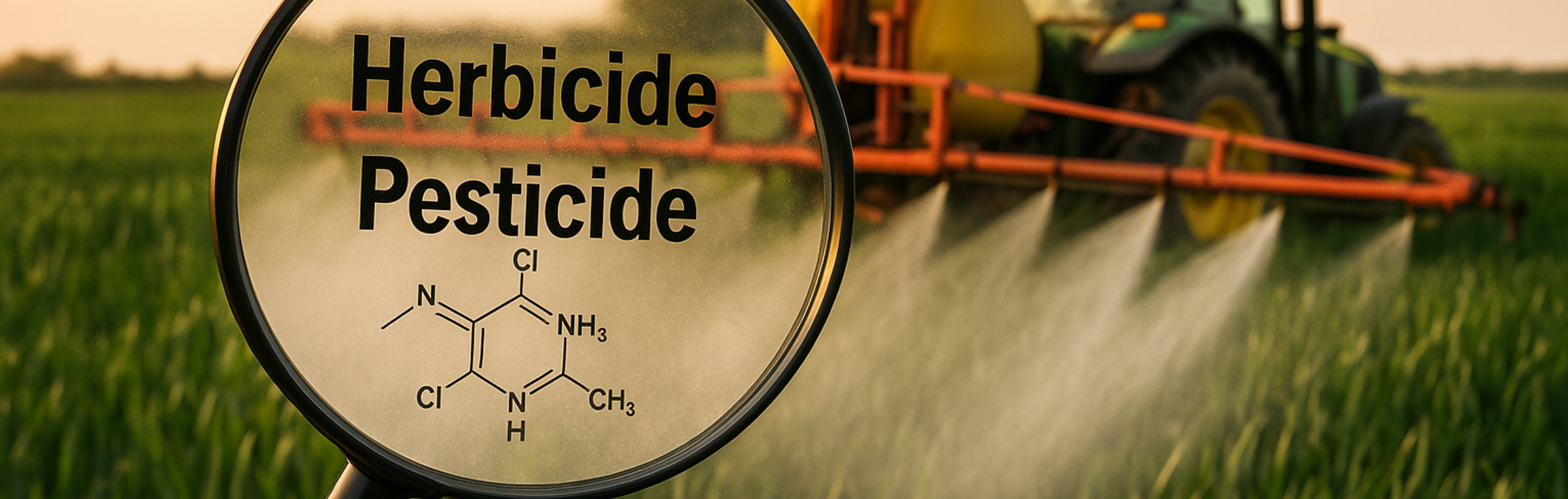
Modern herbicides and pesticides are highly effective but can be persistent and mobile under certain environmental conditions. In agricultural watersheds, these compounds may:
- Migrate via surface runoff, tile drains, or shallow groundwater
- Impact drinking water supplies and aquatic ecosystems
- Exhibit seasonal concentration spikes tied to application timing and hydrologic events
- Interact with nutrients and sediments to enhance downstream impacts
Corrective Action & Mitigation
Our services focus on understanding and managing transport mechanisms by:
- Evaluating watershed-scale fate and transport pathways
- Linking chemical detections to land use, application practices, and hydrology
- Supporting best management practices (BMPs) and source-control strategies
- Assisting with monitoring program design and regulatory compliance
We help clients move beyond detection toward predictive understanding and risk-based management.



Across multiple sectors, our team delivers high-resolution contaminant forensics to help clients diagnose complex water-quality problems and implement defensible, regulator-aligned solutions. Recent projects include microbial source tracking that traced E. coli contamination in a public water system to upstream CAFO operations, enabling targeted mitigation and protecting community health; PFAS fingerprinting that identified leaching from an active industrial landfill as the source of a growing contamination plume, supporting corrective-action planning and utility-scale treatment design; and 6PPD-Q investigations that linked roadway runoff to acute toxicity in local aquatic ecosystems, guiding municipalities toward modern stormwater retrofit strategies. We also completed advanced geochemical and isotopic evaluations of herbicide and pesticide transport in agricultural watersheds, clarifying exposure pathways and reducing regulatory uncertainty for landowners and water districts. Together, these case studies demonstrate how our integrated approach — combining chemical, isotopic, microbial, and multimedia fate-and-transport analysis — helps clients protect water resources, reduce liability, strengthen regulatory compliance, and make confident, data-driven decisions in the face of rapidly evolving environmental challenges.
LET’S TALK ABOUT YOUR PFAS NEXT STEP
Brad Bennett, PG
bbennett@waterenvtech.com
John Trudnowski, PE
jtrudnowski@waterenvtech.com

“Clarity through chemistry—ensuring every regulatory decision is backed by data.”