BUTTE SCHOOL DISTRICT #1 BUS BARN REMEDIATION
Butte, Montana
The Butte School District #1 (the District) Bus Barn on East Front Street has served as the main location for fueling, parking, and maintaining school buses for many years. In 1992, during routine removal of two underground fuel tanks, petroleum contamination was discovered beneath the facility. Although crews removed contaminated soil at that time, the site could not reach final environmental closure because the necessary confirmation samples were not submitted to the Montana Department of Environmental Quality (DEQ).
Years later, the District worked with WET to carefully assess and address the remaining impacts. From 2012 to 2019, ten groundwater monitoring wells were installed, and samples collected through 2023 confirmed the presence of petroleum compounds and legacy fuel additives like 1,2-dichloroethane (1,2-DCA) and ethylene dibromide (EDB). This data helped define both the horizontal and vertical extent of contamination across the site.
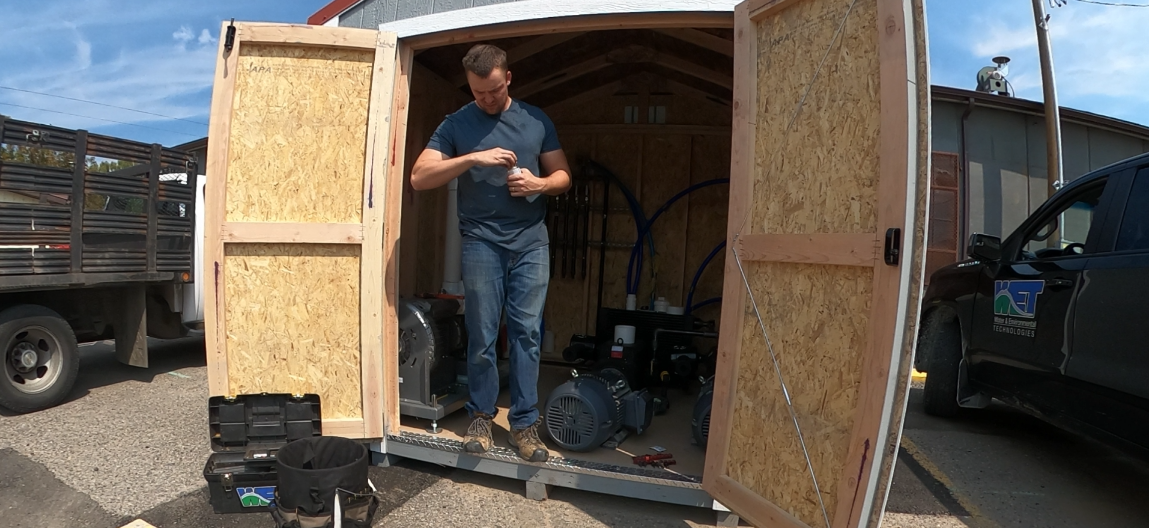
Once site conditions were understood, WET carried out a pilot cleanup using a combined air sparging and soil vapor extraction system (AS/SVE). This system works in two complementary ways: air sparging injects clean air into contaminated groundwater to promote natural biodegradation and help break down petroleum compounds on site, while soil vapor extraction removes vapors from the surrounding soil and treats them above ground. By addressing both groundwater and soil contamination simultaneously, this approach speeds up cleanup and prevents further spread of contaminants. The pilot test showed that AS/SVE could effectively target the contamination and laid the groundwork for designing a full-scale remediation system.
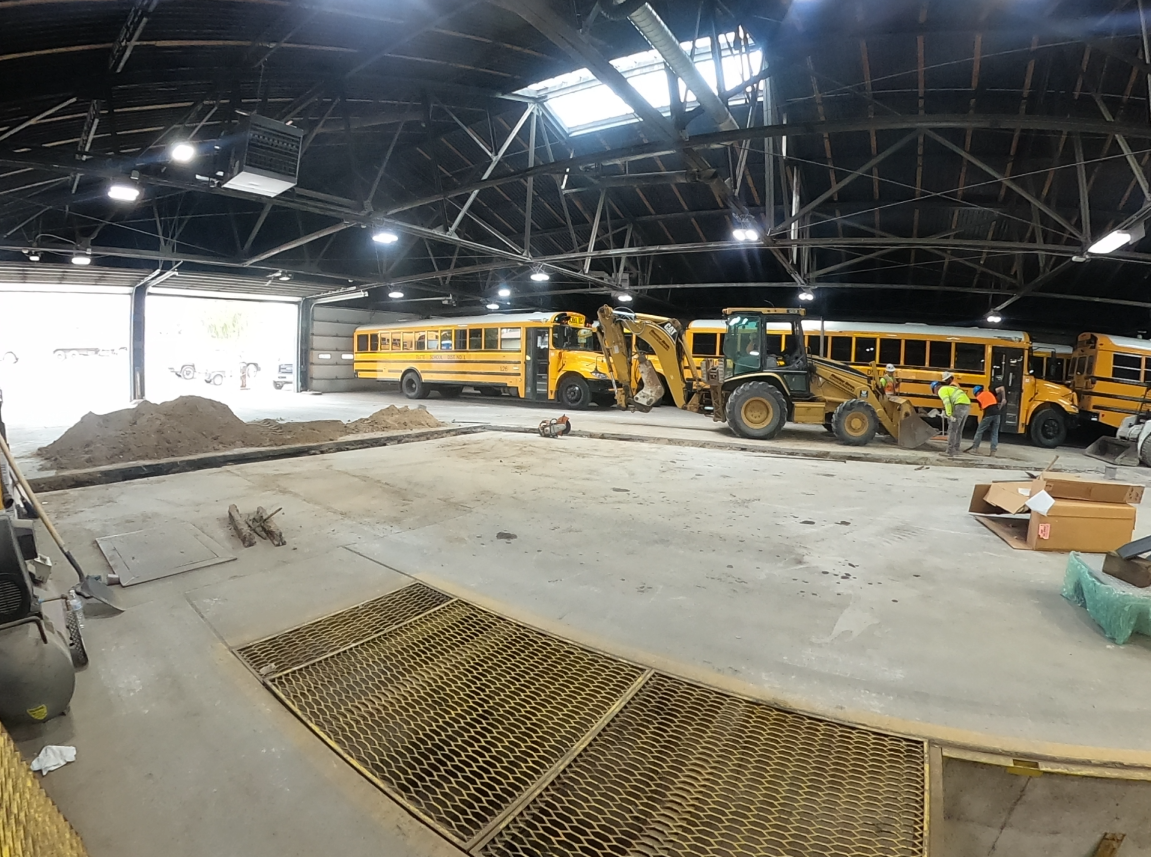
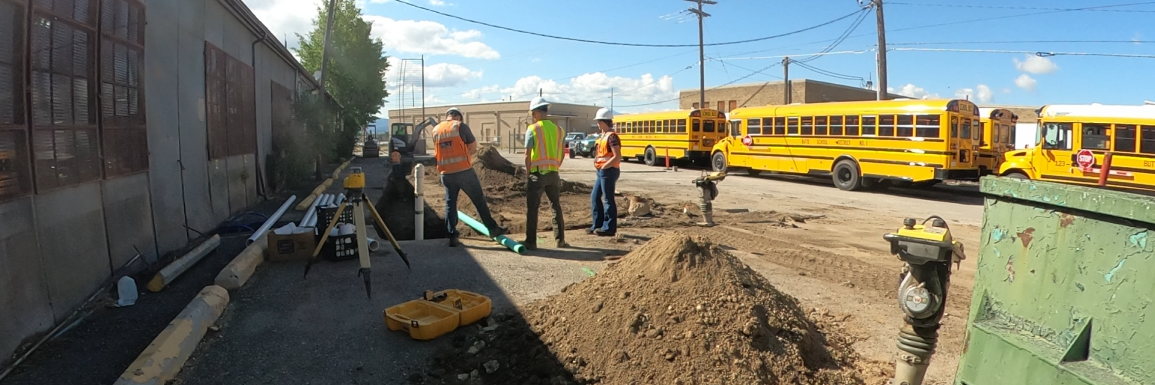
In March 2024, DEQ issued a formal request for the next phase of corrective action to move the site toward final closure. WET responded by designing and installing a full-scale AS/SVE system. This involved expanding the pilot system to include five new treatment wells, one additional SVE well, four monitoring points (including one specifically for soil vapor sampling), three vapor points, and several observation wells. The air sparging wells helped treat dissolved petroleum in groundwater, while the vapor extraction well and monitoring points captured soil vapors and tracked system performance in real time. During drilling, soil and duplicate quality-control samples were collected to verify site conditions and ensure that the final system design addressed all contamination areas.
Monitoring played a crucial role in the cleanup process. Three observation wells were installed inside the building, and additional wells outside were set up to monitor groundwater and underground conditions over time. Since part of the system was beneath the building footprint, three vapor pins were installed to track sub-slab vacuum conditions, ensuring effective capture of soil vapors and maintaining the safety of building occupants during operations.
Because the Bus Barn continued operating as an active facility supporting district transportation, the installation of the full-scale system was carefully scheduled for the summer months when buses were off-site and activities were minimized. Most of the property was paved, with only a few small unpaved areas and the maintenance shop located in the southeast corner. The subsurface soils consisted of silt, clay, and sand, with groundwater approximately 28 feet below the surface. The facility relied on the City of Butte’s municipal water system, ensuring that no private drinking water supplies were affected during cleanup.
The combined strategy of pilot testing, system expansion, and thorough monitoring helped WET move the site closer to complete environmental closure while ensuring safety, efficiency, and transparency. This project showcases proactive environmental care and emphasizes the District’s and WET’s dedication to safeguarding the community and the surrounding environment.